
Game Design • Programming • Level Design • Systems Design
Dino Platformer — 2D Game Development with Python & Pygame
Dino Platformer is a 2D side-scrolling platformer game developed in Python using the Pygame framework. The game follows a dinosaur character navigating through a dynamic environment filled with platforms, hazards, enemies, and collectibles. Players must jump across ledges, avoid lava, dodge enemy attacks, and collect gems while progressing through multiple environments. The project was designed to explore core principles of game development, including real-time physics, collision detection, sprite animation, enemy AI, and level design.
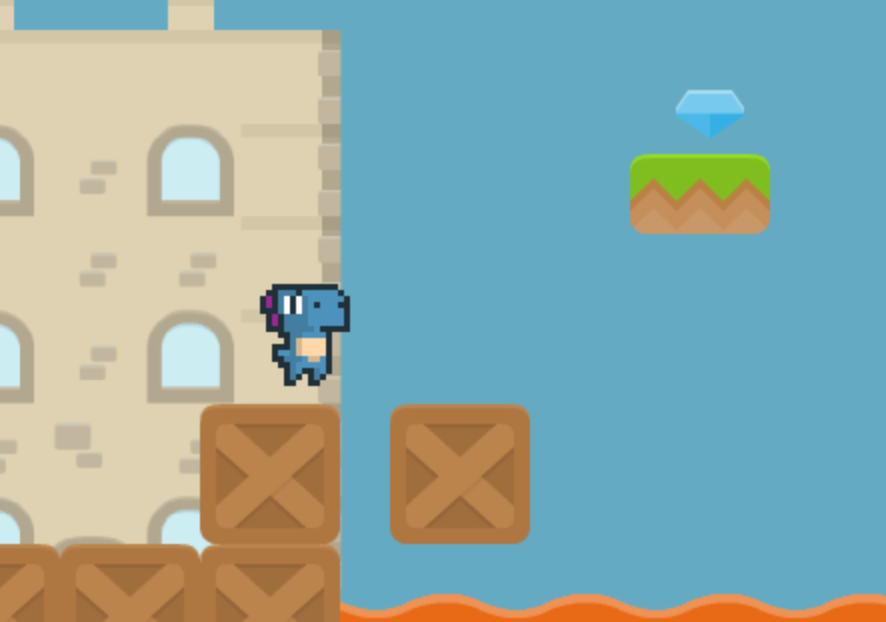
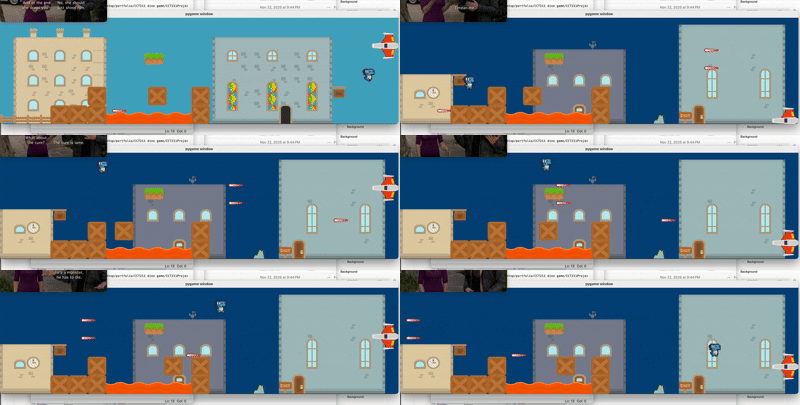
Enemy characters patrol the level and fire laser projectiles toward the player, introducing challenge and urgency. The projectile system is generated dynamically, and enemy behaviour is controlled through real-time logic that adjusts difficulty as the player progresses. Contact with enemies, bullets, or lava results in a game-over condition, reinforcing careful movement and spatial awareness.
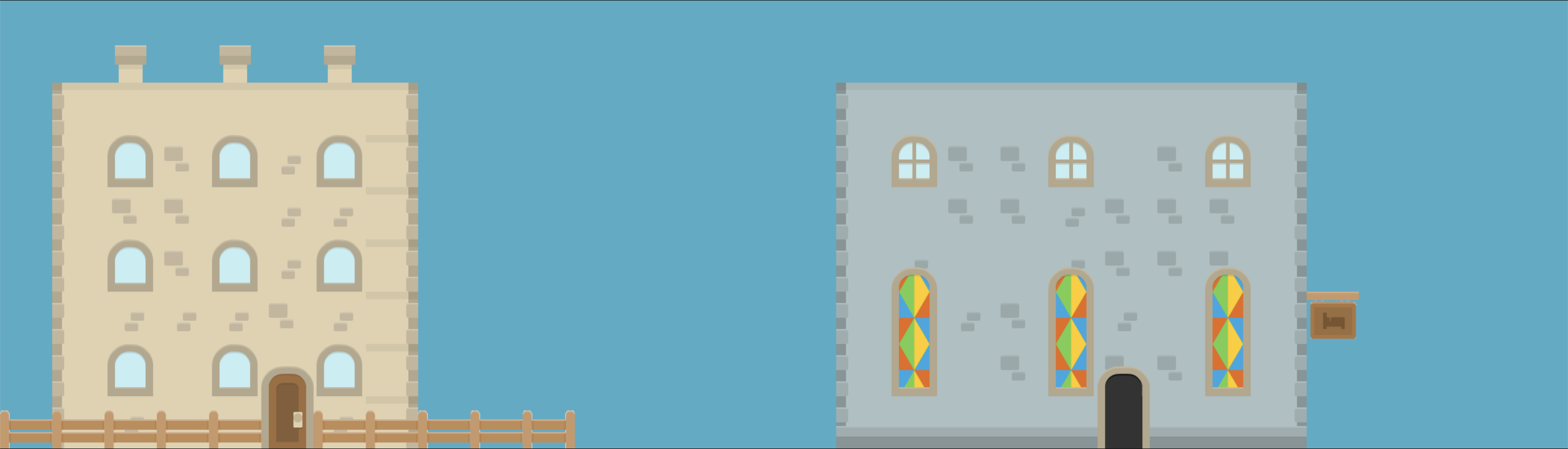
Level design was built using modular platform tiles, ledges, moving platforms, and environmental boundaries to guide player navigation and control difficulty. The game also features a background-swapping system that simulates progression between environments. When the player reaches the edge of the screen, the background changes, the level resets, and the difficulty increases through additional enemy fire.
The entire game was built using object-oriented programming principles, with separate classes controlling the player, enemies, platforms, projectiles, hazards, and collectibles. This modular structure allows for scalable level creation and system expansion.
Outcome
Overall, Dino Platformer demonstrates a complete game development pipeline — from asset integration and animation to physics simulation and AI behaviour — resulting in a fully playable arcade-style platformer experience.
<<< See Previous Project
See Next Project >>>

Game Design • Programming • Level Design • Systems Design
Dino Platformer — 2D Game Development with Python & Pygame
Dino Platformer is a 2D side-scrolling platformer game developed in Python using the Pygame framework. The game follows a dinosaur character navigating through a dynamic environment filled with platforms, hazards, enemies, and collectibles. Players must jump across ledges, avoid lava, dodge enemy attacks, and collect gems while progressing through multiple environments. The project was designed to explore core principles of game development, including real-time physics, collision detection, sprite animation, enemy AI, and level design.
Enemy characters patrol the level and fire laser projectiles toward the player, introducing challenge and urgency. The projectile system is generated dynamically, and enemy behaviour is controlled through real-time logic that adjusts difficulty as the player progresses. Contact with enemies, bullets, or lava results in a game-over condition, reinforcing careful movement and spatial awareness.
Level design was built using modular platform tiles, ledges, moving platforms, and environmental boundaries to guide player navigation and control difficulty. The game also features a background-swapping system that simulates progression between environments. When the player reaches the edge of the screen, the background changes, the level resets, and the difficulty increases through additional enemy fire.
The entire game was built using object-oriented programming principles, with separate classes controlling the player, enemies, platforms, projectiles, hazards, and collectibles. This modular structure allows for scalable level creation and system expansion.
Outcome
Overall, Dino Platformer demonstrates a complete game development pipeline — from asset integration and animation to physics simulation and AI behaviour — resulting in a fully playable arcade-style platformer experience.
<<< See Previous Project
See Next Project >>>
Game Design • Programming • Level Design • Systems Design
Dino Platformer — 2D Game Development with Python & Pygame
Dino Platformer is a 2D side-scrolling platformer game developed in Python using the Pygame framework. The game follows a dinosaur character navigating through a dynamic environment filled with platforms, hazards, enemies, and collectibles. Players must jump across ledges, avoid lava, dodge enemy attacks, and collect gems while progressing through multiple environments. The project was designed to explore core principles of game development, including real-time physics, collision detection, sprite animation, enemy AI, and level design.
Enemy characters patrol the level and fire laser projectiles toward the player, introducing challenge and urgency. The projectile system is generated dynamically, and enemy behaviour is controlled through real-time logic that adjusts difficulty as the player progresses. Contact with enemies, bullets, or lava results in a game-over condition, reinforcing careful movement and spatial awareness.
Level design was built using modular platform tiles, ledges, moving platforms, and environmental boundaries to guide player navigation and control difficulty. The game also features a background-swapping system that simulates progression between environments. When the player reaches the edge of the screen, the background changes, the level resets, and the difficulty increases through additional enemy fire.
The entire game was built using object-oriented programming principles, with separate classes controlling the player, enemies, platforms, projectiles, hazards, and collectibles. This modular structure allows for scalable level creation and system expansion.
Outcome
Overall, Dino Platformer demonstrates a complete game development pipeline — from asset integration and animation to physics simulation and AI behaviour — resulting in a fully playable arcade-style platformer experience.
<<< See Previous Project
See Next Project >>>